


Plywood Uses
Posted
A wall-sheathing sheet is not a cabinet-face sheet. Pick the panel for the job first, then order.
Plywood starts as thin wood veneers glued into a panel. What panel you need changes with the work. Structural sheathing? Furniture and cabinet faces? Curved forms? Each one points to a different panel.
Each of those jobs pulls something different from the sheet. Before you buy, check the rating, exposure, finish, and bend info for that exact panel.
The three jobs, and what each one needs
Structural sheathing carries load. Natural Resources Canada describes structural plywood used on wall and floor sheathing in platform-frame housing. The Canadian Wood Council covers structural panel properties and what the grade stamps carry. For a floor, roof, or wall assembly, check the rating first. Don't start with the face.
Furniture and cabinet work is a different question. APA lists furniture, cabinets and components as plywood applications, with different panel constructions, dimensions and thicknesses available. Here you are usually choosing for the visible face and how it takes a finish, not for a span rating.
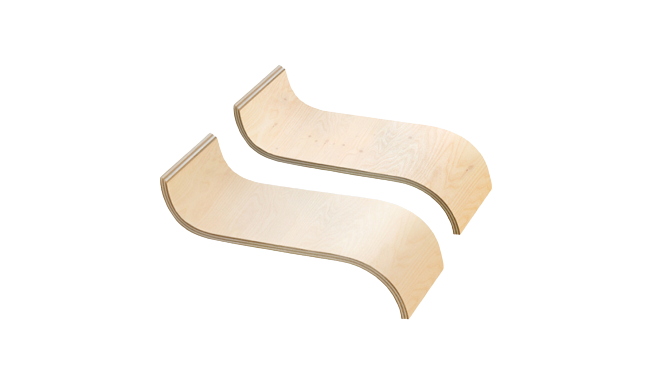
Curved forms are the third job. Cranco's Flex Plywood page describes flexible birch plywood for radial concreting, unusual formwork, and curved interior or outdoor design work. That's a separate use. A sheet that bends does not automatically carry a structural-floor rating.
- Choose a plywood grade and sheet format
- Flexible plywood for curved work
- Plywood product information
- See Cranco's flexible birch plywood Confirm the panel's bend information and structural rating for your use.
- Contact Cranco
Job-to-panel checklist
Work down this list before you order, and get an answer for each line that applies to your job:
Going into structural sheathing? Check the structural designation and grade stamp on the panel. Structural plywood is a category. That doesn't make every sheet fit for load-bearing work. What counts is the designation on the panel you're holding.
Furniture and cabinet faces: confirm the face grade and the sheet format you need. Cranco's grade and size guide covers birch face grades and available formats, so start there rather than repeating it here. Decide whether the face is getting paint, clear finish or laminate before you pick the sheet, because that changes what you want to see on the face. Confirm the thickness and construction suit the component, since APA notes different constructions, dimensions and thicknesses are available across furniture and cabinet work. If the piece is going outdoors or into a damp spot, confirm the exposure rating for that panel rather than assuming interior and exterior sheets are interchangeable. For curved work, get the bend information for the particular supplied panel. Cranco's flexible plywood guide covers curved-panel detail; a minimum bend radius is not something to assume from a general description of flexible plywood. If the curve is also carrying load, treat the structural question as separate from the bend question and confirm both.
Mistakes that cost a sheet
The common one is treating plywood as one material. A decorative birch face and a rated sheathing panel can look similar in a stack and do completely different jobs. If you buy on appearance alone for a floor or roof assembly, you have skipped the only check that matters there.
The second is assuming a bendable sheet is also a structural one. Flexible plywood is described for radial concreting, unusual formwork and curved design work, which is a real use, but that description does not establish a structural-floor rating or a minimum bend radius. Get those details for the panel you are actually buying.
The third is borrowing a specification from a neighbouring product or from a US source. APA's application guidance is US-based, and its specifications should not be read as a Canadian code-compliance claim. Use the Canadian industry references for the application categories, then confirm the designation on the panel in front of you.
What this page can't tell you
This is an application overview, not an engineering design. It does not give you a project-specific thickness, span or code approval, and it should not be used as one. Those come from the panel's own designation and, where the job needs it, from whoever is signing off on the assembly.
It also does not tell you what is on the shelf. Stock, price and available colours change, and nothing here should be read as a current inventory claim. Check the product page or ask Cranco for the panel you have in mind.
Where to go next
If you are still choosing between sheets, the grade and size guide covers birch face grades and formats. If the job is curved, the flexible plywood guide goes into curved-panel detail. For the product side, the plywood page has the panel information, and you can send Cranco the job, the substrate and the panel you are considering if the data does not settle the choice.
What are the main uses for plywood?
Three broad jobs cover structural sheathing for walls and floors, furniture and cabinet work, and curved forms. Each job asks for different panel properties. That means the rating, exposure, finish, and bend information you need changes with the job.
Can I use any plywood for structural sheathing?
No. Structural plywood goes on walls and floors as sheathing in platform-frame housing. But the category existing doesn't make every plywood product fit for load-bearing work. Check the exact panel's structural designation and grade stamp.
Is flexible plywood structural?
Flexible birch plywood is described for radial concreting, unusual formwork and curved interior or outdoor design work. That description does not establish a structural-floor rating or a minimum bend radius, so get those details for the particular supplied panel.
What should I confirm before buying plywood for a cabinet face?
Pick the finish before you buy. Paint, clear finish, and laminate each change what you want from the face. Then check face grade, sheet format, thickness, and construction. If the piece is going into a damp or outdoor spot, check the exposure rating too.