



Flexible Plywood: Where It Bends and Which Grade to Use

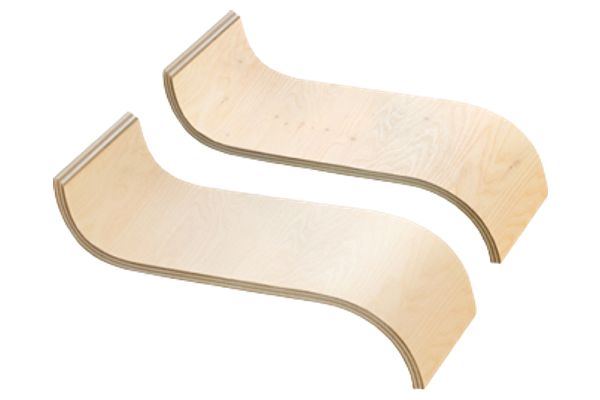
Ordinary plywood is built to stay flat. Flexible plywood is built to bend: a special arrangement of the veneer plies lets the sheet follow a radius on the job site, without cutting kerfs into it.
That makes it the sheet for curved concrete formwork, round columns and curved wall panels.
Sizes and strength
We carry flexible plywood in 4 ft by 8 ft sheets (1220 by 2440 mm), in three thicknesses:
- 9 mm, 7 plies
- 12 mm, 9 plies
- 15 mm, 11 plies
Bending strength along the grain is at least 120 MPa. An elastic film that resists cracking is available as an option.
Which grade
| Grade | What it means | Use it for |
|---|---|---|
| B | Practically no defects: small, sound knots up to 25 mm and hollow knots up to 5 mm | Faces that will be seen |
| BB | Veneer repairs allowed on knots over 25 mm and visual defects | General work where small repairs are acceptable |
| F / FF | Multiple defects, not repaired | Mostly formwork |
The grades are listed face and back: B/BB, BB/BB and FF.
Where it is used
- Circular girder formwork
- Columns and decorative columns
- Radial framed formwork
- Curved wall panels
- Vending trailers and camper vans
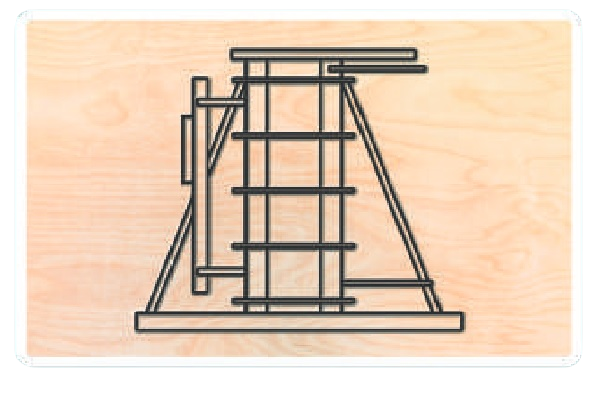
On larger projects it also goes into cooling towers, tunnels, bridge supports and arches, and sports facilities.
Flat work
For flat work, see Choosing the Right Plywood: A Quick Guide and our plywood range. See flexible plywood.
Bring the thickness, the grade, the number of sheets and the radius you need to bend to the counter in Concord, Barrie or Mississauga, and we will confirm the order before you travel.