



What Is Vinyl J Trim
Posted
Vinyl J trim is a J-profile accessory for siding jobs. It holds soffit, fascia, and panel edges. It covers cut ends. Know what it does, where it goes, and where it stops working.
Picture a length of vinyl siding accessory. Its cross-section looks like a J. The channel is open. It takes the cut edge of a siding panel, a soffit panel, or fascia. Behind the channel is a nailing flange. That flange fastens to the wall. J trim finishes an edge. It keeps the raw cut out of sight.
Don't count on it for structure. Don't count on it to seal. Its job is to hold an edge and hide a cut. If the joint has to shed water by itself, you need another product.
What the J profile actually does
One piece, two jobs. The channel takes the panel edge. That puts the cut end of the siding or soffit inside the trim, where you don't see it. The flange behind the channel is your nailing surface. Nail slots let the trim move as the panel expands and contracts.
Why the slots? Movement. Vinyl siding and soffit grow and shrink as temperature changes. The trim must let the panel slide. It must not pin the panel. Nail in the center of the slot. Don't nail tight to the edge. Leave the panel free to move inside the channel.
J trim also sets the line you see. On a soffit run, it makes the perimeter. The soffit panels die into it. On a wall, it finishes the top, bottom, or side of a siding course. That is where a panel meets a window, door, corner, or roofline.
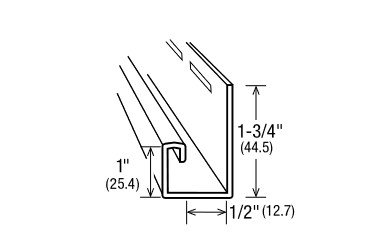
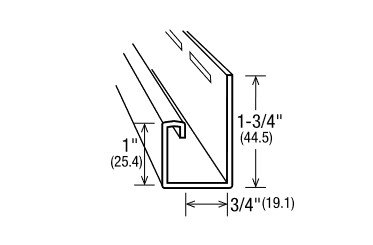
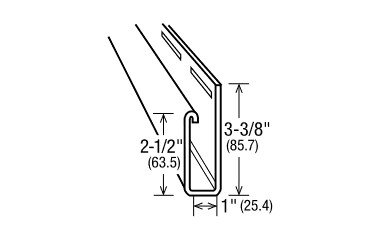
- Vinyl J channel, trim and corner posts Cranco carries Every J channel size, undersill trim, corner posts and soffit.
- Contact Cranco
Where J trim goes on a job
On windows and doors, J trim goes on the sides and head. It gives the siding panel edge a channel to tuck into. The sill often takes a different piece. That piece has to shed water, and J trim won't do that. Check the accessory the window maker calls for before you figure J trim covers the bottom.
For soffit work, J trim runs along the wall and the fascia line. Those runs make the perimeter that holds the soffit panels. Where siding meets a roof or soffit at the top of a wall, J trim finishes the last course.
At an inside corner or outside corner, the corner post does the work, not J trim. J trim is for edges that terminate, not for corners that turn.
Sizing and fit before you cut
Size J trim to the panel it has to take. The channel needs enough depth for the panel thickness and the return leg. The flange needs enough width to nail. Too shallow, and the panel won't seat. Too deep, and it rattles and leaves a gap.
Use trim made for the siding or soffit system you're putting up. Each maker builds its accessory profiles around its own panels. Mix brands, and the channel may not hold the panel the way it should. Go to the panel's installation instructions and use the accessory listed there.
Use a fine-tooth blade or snips on vinyl. Cold vinyl turns brittle. Warm the material before you cut or bend it. Don't force a cold piece into place.
How it goes on
Snap a line before you start. Keep the trim straight. Every panel that dies into it follows that line. Drive fasteners through the flange into solid framing or sheathing. Don't fasten to the panel.
Nail in the centre of the slot and leave the trim free to move. Do not drive the nail head tight against the vinyl. Over-driving is the most common way to buckle a run of trim and the panels with it.
Leave a gap where two lengths of trim meet, and where the trim meets a corner or a window accessory. Vinyl moves, and butting pieces tight gives it nowhere to go. Overlap or gap according to the panel manufacturer's instructions for your climate range.
What J trim will not do
J trim is not a flashing. It does not direct water away from a wall, and it does not seal an opening. Where water has to be managed, the window, door or roof detail handles it, and J trim only finishes the siding edge around that detail.
It is not structural. It does not carry a load, brace a panel or hold a corner together. It also does not replace a starter strip at the bottom of a wall, a corner post at a corner, or a sill accessory at a window bottom.
It is not a universal fit. A J trim that works with one panel profile may not seat another. If you are matching existing siding, take a cut-off of the old panel and the old trim with you so the channel depth and return can be compared.
What to have ready when you buy
Know the panel you are trimming, the length of run, and whether the edge is a top, bottom, side or soffit perimeter. Those three facts decide the profile and the quantity.
Measure the run and add for waste and for the gaps at joints. Vinyl trim comes in standard lengths, so plan your cuts around the joints rather than ending up with a short piece at a corner.
If the panel's instructions call for a specific accessory at a window, door or soffit edge, buy that accessory. J trim is the general edge piece, not a substitute for a purpose-built detail.
Is vinyl J trim the same as J-channel?
Yes. J trim and J-channel are the same J-shaped siding accessory. The channel receives the cut edge of a siding or soffit panel and the flange behind it nails to the wall.
Does J trim go around the bottom of a window?
Usually not. The sill needs a piece that sheds water, and J trim does not. Check the window's own accessory and the panel manufacturer's instructions before you run J trim along a sill.
Can I nail J trim tight to stop it moving?
No. Nail in the centre of the slot and leave the trim free to move. Vinyl expands and contracts with temperature, and a tight nail buckles the trim and the panels that die into it.
Can I use J trim at a corner?
No. Corners use a corner post. J trim finishes an edge that terminates, such as the top or bottom of a siding course or the perimeter of a soffit.