



Foam Gun Tips
Posted
A foam gun controls expanding foam output. Learn how to adjust it, use it, and clean it for the next job.
You get a steady foam bead with a foam gun, not a messy spurt from a straw. The key is a controlled bead. Make sure your gun fits the foam can, adjust the flow screw before you squeeze, and clean the barrel before the foam hardens.
Most issues aren't with the gun itself. It's usually a bad thread match, the flow screw left wide open, or a barrel left dirty. Fix these three things, and the gun works right.
The short answer
Use a foam gun for a consistent bead in joints, window frames, or penetrations you seal in sections. Use a straw nozzle for one small gap you won't revisit for a long time.
Set the flow screw to a low opening first, then open it until the bead is the width you want. A gun that is wide open from the first pull lays down more foam than the joint can take, and one-component foam keeps expanding after it leaves the nozzle.
Clean the gun with the manufacturer's cleaner before the foam cures in the barrel. Once it sets inside the gun, the gun is usually done.


- Foam and caulking guns Cranco carries Every gun we stock, with its size.
- Soudafoam All Season The gun foam for general work.
- Soudafoam Window and Door The low-expansion foam for frames.
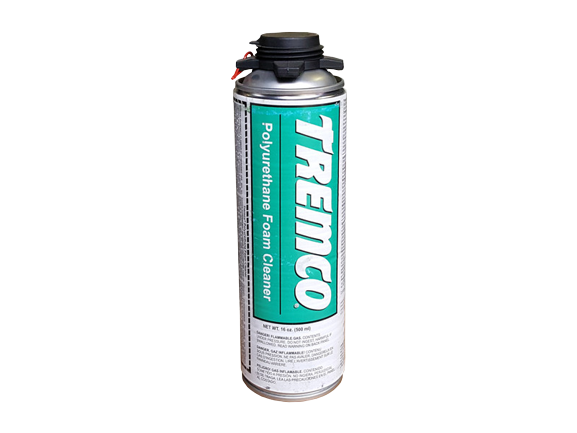
- Foam gun cleaner What to flush the gun with when the job is done.
- Contact Cranco
Match the gun to the can before anything else
Foam guns thread onto cans with a specific connector. If the gun and can do not share that connector, you cannot make them work by tightening harder. Check the can's valve and thread against the gun's connector before you buy either one.
The same applies to the foam itself. A gun rated for one-component foam is not the tool for a two-component kit, and a can of cleaner is not a substitute for a can of foam. Keep the gun, the foam and the cleaner as a matched set.
Set the flow screw, then leave it alone
The flow screw at the back of the gun controls how far the needle opens. Start closed, then open it a quarter turn at a time until the bead is right. Small adjustments, not big ones.
Once the bead is right for that joint, stop adjusting. Reopening the screw for every gap is how you end up with foam overflowing a window reveal and a mess to cut back later.
Keep the nozzle moving. Foam piles up fast if it stays in one place. The bead gets bigger as the can heats up while you work.
Bead size and joint depth
This foam expands after it leaves the nozzle. The bead you put down is not the final size. Fill a joint halfway and let the foam expand. Don't pack it full and then cut away a lot of excess.
For deep gaps, foam in stages. A single deep pour traps uncured foam in the middle, and that section may never cure properly.
If the joint needs a backer or a specific depth, follow the foam manufacturer's instructions for that product. The gun does not change the foam's requirements.
Cleaning is the whole game
Foam cures in the gun the same way it cures in a joint. The difference is that a cured gun is scrap. Clean the barrel and nozzle with the manufacturer's foam cleaner as soon as you stop using the gun, even if you plan to use it again in an hour.
If you are stopping for the day, remove the can, clean the gun, and store it with the cleaner can attached or with the valve closed per the gun maker's instructions. A gun left on a half-used can overnight is a common way to lose a gun.
Do not use a generic solvent unless the gun maker lists it. The wrong solvent can damage the seals, and a gun with damaged seals leaks foam at the trigger.
Mistakes that cost you a gun or a joint
Leaving the flow screw open between uses. Foam creeps into the barrel and sets.
Using the gun on a can it does not thread onto. The connection leaks and the foam goes everywhere except the joint.
Foaming a joint that is too wet, too cold, or too hot for the foam you bought. The gun cannot fix a foam that will not cure in those conditions. Check the can's application temperature range before you start, not after the bead is in the gap.
Can I use any foam gun with any foam can?
No. The gun and can have to share the same connector and thread. Check the can's valve against the gun's connector before you buy either one.
How do I stop the bead from getting too wide?
Start with the flow screw nearly closed and open it a quarter turn at a time until the bead is right. Keep the nozzle moving, and remember the foam keeps expanding after it leaves the gun.
Do I have to clean the gun after every use?
Clean it as soon as you stop using it, even for a short break. Foam cures in the barrel the same way it cures in a joint, and a cured gun is usually scrap.
What if the foam will not cure in the joint?
Check the can's application temperature range and the joint conditions against the manufacturer's instructions. The gun does not change the foam's cure requirements.